
What I’ll Cover (Tap to Jump)
Most people start astrology by learning their sun sign. Then they hit a wall when someone says “your moon is in the 7th house.” That’s where astrology houses for beginners become the real unlock. I remember staring at my first chart—a pizza wheel of symbols—and feeling like I needed a decoder ring. But houses are simpler than they look. They’re just the stage where your planets perform.
Below is the exact framework I wish I’d had when I started. No fluff, no mystical vagueness. Just what each house means, how to spot yours, and the quiet traps that trip up almost every newbie.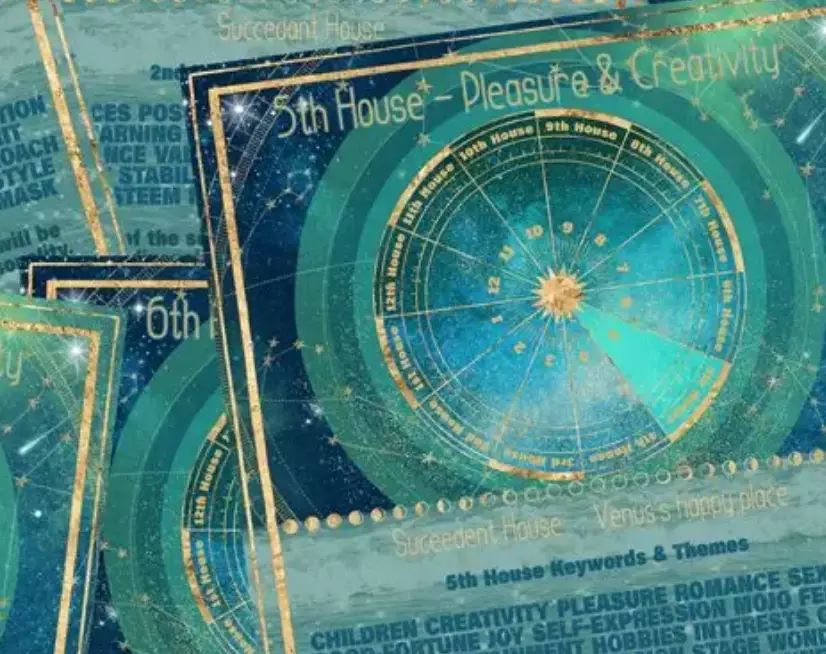
What Are Astrology Houses, Actually?
Think of the zodiac signs as the “what” (the flavor of energy). Houses are the “where” (the area of life). There are 12 houses, each tied to a specific slice of existence: money, siblings, home, creativity, health, partnership, and so on.
Here’s the non-consensus bit I’ve learned from a decade of reading charts: most beginners obsess over which sign sits on a house cusp. That’s step two. Step one is noticing which house is emphasized—meaning it has a crowd of planets. A house with three planets will shout louder than any cusp sign.
Quick analogy: If your birth chart is a movie, planets are the actors, signs are their costumes, and houses are the scenes. A planet in the 4th house is acting out family drama. The same planet in the 10th house is chasing career glory.
How to Find Your Houses in a Birth Chart
You need your exact birth time. Not “around 3 PM.” Exact. Why? Because the house cusps shift roughly every four minutes. A 15-minute error can push your rising sign into the next one and scramble every house.
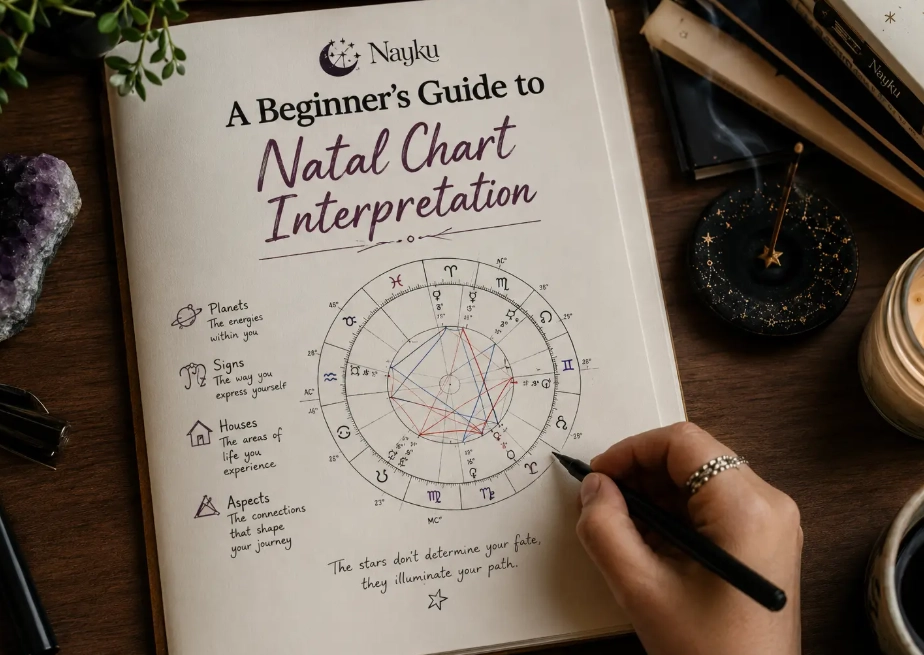
Grab a free chart from a site like Astro.com (the Swiss Ephemeris data is solid). Look for the inner wheel. The number 1 sits on the left horizon line (your Ascendant). Then the numbers run counterclockwise: 2, 3, 4, and so on.
Here’s a checklist I walk every beginner through:
- Verify your birth time on your birth certificate. If it’s missing, ask a relative who was present. I’ve seen people guess and end up with a 5th-house stellium that belonged in the 6th.
- Identify the Ascendant (the cusp of the 1st house). That’s the sign rising on the left.
- Count the houses counterclockwise from there. Each house has a cusp (the starting line) and a sign on it.
- List planets per house. Use a simple bullet list or a note on your phone. This is your raw material.
If your chart looks like a messy spiderweb, don’t panic. Roughly 80% of beginners misread the house numbers the first time. I did—I called my 6th house the 7th for a whole week.
The 12 Houses and What They Rule
This table is the cheat sheet I still scribble on sticky notes. Keep it nearby. The “keywords” column is what I actually use in readings.
| House | Life Area | Keywords for Beginners |
|---|---|---|
| 1st | Self, appearance, first impressions | Identity, body, “how I show up” |
| 2nd | Money, possessions, values | Earnings, spending, self-worth |
| 3rd | Communication, siblings, local travel | Texts, short trips, neighbors |
| 4th | Home, family, roots | Mom, apartment, emotional safety |
| 5th | Creativity, romance, children | Flirting, art, hobbies, fun |
| 6th | Health, daily routines, service | Gym, meal prep, coworkers |
| 7th | Partnerships, marriage, open enemies | Spouse, business partners, contracts |
| 8th | Shared resources, intimacy, transformation | Taxes, inheritance, deep bonding |
| 9th | Higher learning, travel, philosophy | College, abroad, beliefs |
| 10th | Career, public reputation | Boss, goals, LinkedIn |
| 11th | Friends, networks, hopes | Groups, social media, wishes |
| 12th | Subconscious, solitude, endings | Dreams, retreat, hidden stuff |
House Polarities: A Shortcut I Use
Houses come in pairs. The 1st is “me,” the 7th is “you.” The 2nd is “my money,” the 8th is “our money.” The 3rd is “my daily chats,” the 9th is “big-picture philosophy.” Learning these pairs cuts your memorization time in half.
Common Mistakes Beginners Make (and How to Dodge Them)
I’ve mentored dozens of people through their first chart. The same three traps show up again and again.
- Confusing signs with houses. “I’m a Leo” refers to the sun sign. “My sun is in the 4th house” refers to home and family. Mixing them up leads to weird conclusions like “I’m a Leo so I must be famous” when your sun actually sits in the 12th house of solitude.
- Ignoring intercepted houses. At high latitudes, some signs get “swallowed” inside a house. That can mean a life area feels stuck or delayed. Beginners often miss this. I caught it only after noticing a client’s 5th house had no sign on its cusp—the entire sign of Leo was hidden inside.
- Overweighting the 12th house. Newbies see the 12th as “bad luck” or “hidden enemies.” In reality, it’s the house of rest and therapy. I’ve seen people with a packed 12th house who thrived after starting meditation, not after fighting invisible demons.
A specific story: A friend asked why her career felt stalled. Her 10th house had Saturn, which often means slow but steady progress. But she kept reading online that Saturn in the 10th equals “failure.” Wrong. It means success comes after age 30 or so. Once she stopped panicking, she got promoted—at 33.
Real Questions from Beginners
My birth time is unknown. Can I still work with houses?
You can, but with caution. Use whole sign houses (where each house is exactly one sign) or a solar chart (sun on the 1st house cusp). It won’t be precise, but it beats guessing. I’ve seen solar charts still nail major themes, though timing events is nearly impossible.
Why does my 7th house have no planets? Does that mean I’ll never marry?
An empty house is normal. It doesn’t mean lack—just that partnership isn’t a primary life focus for you. Look at the ruler of that house (the planet ruling the sign on the cusp) to see where partnership themes show up elsewhere.
I keep hearing “stellium.” What is it, and which house matters?
A stellium is three or more planets in the same house or sign. For beginners, focus on the house. That house becomes a life obsession—in a good way. I have a 5th-house stellium and yes, creative projects dominate my calendar. Don’t ignore the house just because the planets are “friendly.”
Should I use Placidus or Whole Sign houses?
Start with Placidus (the default on most sites) because it’s what most tutorials use. Whole Sign is cleaner for beginners but can confuse you when you switch back. Pick one and stick with it for at least six months. Mixing systems is the fastest way to a headache.
That’s the core of astrology houses for beginners. No secret handshake needed. Get your birth time, count counterclockwise, and pay attention to clusters of planets. The rest is practice.
This article was fact-checked against standard astrological ephemeris data and common chart-reading practices.



Reader Comments