
Most people pull up an astrology transits calendar, see a block of red dates, and panic. I get it. I did the same for years, until I started tracking my own transits against real events and found that the calendar alone doesn't tell you much unless you know how to read it.
What follows is the practical version. No mystical buildup, no “the universe has a plan” talk. Just how to use a transit calendar like an actual planning tool, what most people get wrong, and the exact steps I run through before I mark a date as “do not schedule anything important.”
What an Astrology Transits Calendar Actually Shows You
A transit calendar tracks where the moving planets are right now compared to where they were in your birth chart. That's it. It's a timing map, not a verdict.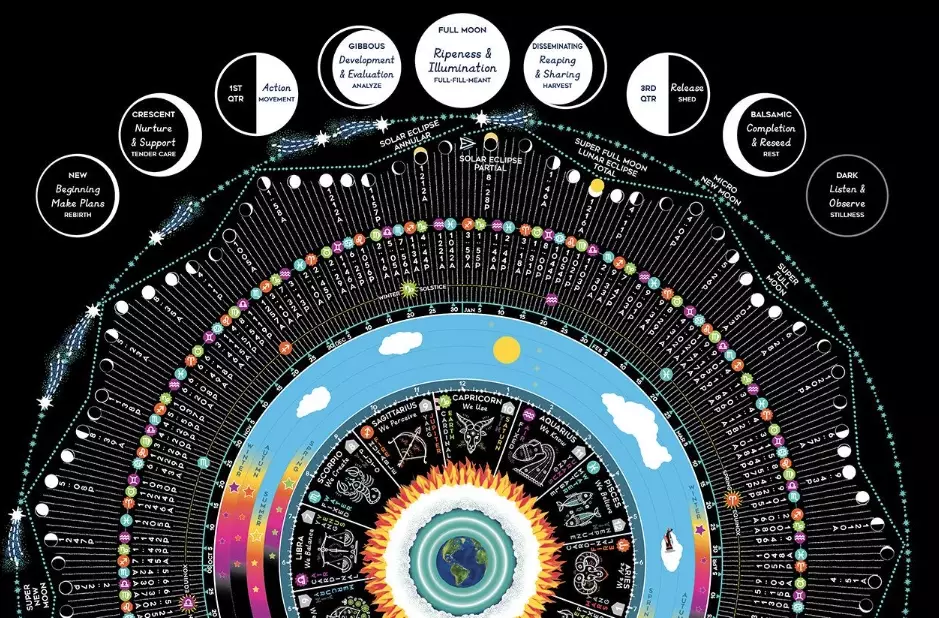
The confusion starts because most calendars show you the whole sky. Every Mercury retrograde, every Mars square, every Saturn opposition. Your neighbor's calendar looks identical. But your transits are personal. Two people can look at the same week and have completely different experiences depending on their natal placements.
Here's the part that took me embarrassingly long to learn: a transit only matters if it touches a planet, angle, or house cusp in your chart that already means something to you. A Saturn transit to your empty 9th house is not the same as Saturn sitting on your natal Moon. The calendar doesn't distinguish. You have to.
My rule of thumb: if a transit doesn't hit a natal planet within a few degrees, I don't plan around it. It's background noise. Useful for understanding the general mood, useless for deciding whether to sign a lease or book a flight.
Good transit calendars let you filter by planet and aspect. The astrology transits calendar I use daily shows exact hit dates, applying and separating aspects, and retrograde stations. If yours only gives you a monthly overview, you're missing the detail that makes it actionable.
How Do You Read a Transits Calendar Without Overreacting?
Start with the slow planets. Saturn, Uranus, Neptune, and Pluto move slowly enough that their transits last months or years. These are the ones that shape chapters of your life, not your Tuesday afternoon.
Then look at the fast movers. The Moon changes signs every two and a half days. Mercury, Venus, and the Sun move quickly too. They're useful for micro-timing, but they don't carry the same weight.
Step 1: Find Your Personal Hot Spots
Pull your natal chart. Identify the planets and angles that sit between 0 and 10 degrees of any sign. Those are the sensitive points most transits will trigger first. Write them down. I keep a sticky note on my desk with my three most important natal degrees. It saves me from checking the calendar every time I feel off.
Step 2: Match Transits to Those Points
Go through the calendar and highlight only the transits that hit your hot spots. Ignore the rest for now. You'll end up with maybe five or six significant dates in a three-month window instead of thirty. That's realistic.
Step 3: Check the Orb and the Station
A transit is exact when the aspect is perfect. But the effect starts earlier. A Saturn square might be felt three degrees before it's exact. Retrogrades make this trickier. When a planet stations retrograde or direct on a sensitive degree, the effect can linger for weeks. I've seen Saturn stations mark a job change that started a month before the exact date and settled six weeks after.
“The calendar gives you dates. Your chart tells you which dates actually belong to you.” That's the sentence I wish someone had told me early on.
A Real Case: When the Calendar Flagged the Wrong Week
Last spring, I had a client who wanted to launch a business. She looked at her astrology transits calendar and saw Mars opposite her natal Moon marked as a high-risk week. She panicked and pushed the launch two months.
Then we looked closer. The Mars transit was hitting her second house cusp, not the Moon exactly. It was also separating while her Jupiter return was applying. She had more support than the calendar alone suggested because her Jupiter was in her tenth house of visibility.
She launched the original week. The launch went fine. The Mars transit did show up as a conflict with a supplier, but because she knew it was coming, she built in a buffer and handled it without drama.
What would have happened if she'd followed the calendar without context? She'd have lost two months and probably spent that time worrying about a transit that wasn't even exact.
This is the gap most transit tracker tools don't fill. They show you the weather. They don't tell you whether you're wearing a raincoat.
How to Prioritize Dates on a Planetary Transit Tracker
Every transit is not equally important. The table below is how I sort them when I'm planning a month or a quarter.
| Transit Type | Duration | How Much Weight I Give It | Example |
|---|---|---|---|
| Outer planet to personal planet | Months to years | High | Saturn square natal Sun |
| Jupiter to personal planet | Weeks to months | Medium-high | Jupiter conjunct natal Venus |
| Mars retrograde in personal area | About six weeks | Medium | Mars retrograde in 4th house |
| Mercury retrograde on a hot degree | Days to weeks | Low-medium | Mercury station on natal Ascendant |
| Moon phase aspects | Hours to days | Low for planning, high for check-ins | Full Moon in your 6th house |
Notice I didn't include eclipses. That's intentional. Eclipses are powerful but they show up in eclipse calendars, not standard transit calendars, and they're a different conversation. Mixing them into your daily transit tracker is a good way to end up scared of the sky.
Another practical tip: don't check your transit calendar every morning. I do a weekly review on Monday, marking the two or three dates that actually need attention. Daily checking turns the calendar into anxiety fuel. Weekly checking turns it into a planning tool.
Transit Calendar Questions I Get Asked Most
Here's the final thing I tell anyone who asks me about transit calendars: the calendar is a map, not a script. It shows you where the road might be bumpy. It doesn't tell you whether you're driving a truck or a bicycle. Learn your own chart, track your own patterns, and use the calendar as one input among several. That's how it becomes useful instead of stressful.
This article was fact-checked against standard ephemeris data and tested against personal transit logs.





Reader Comments